What Gave David Such Confidence Against Goliath?

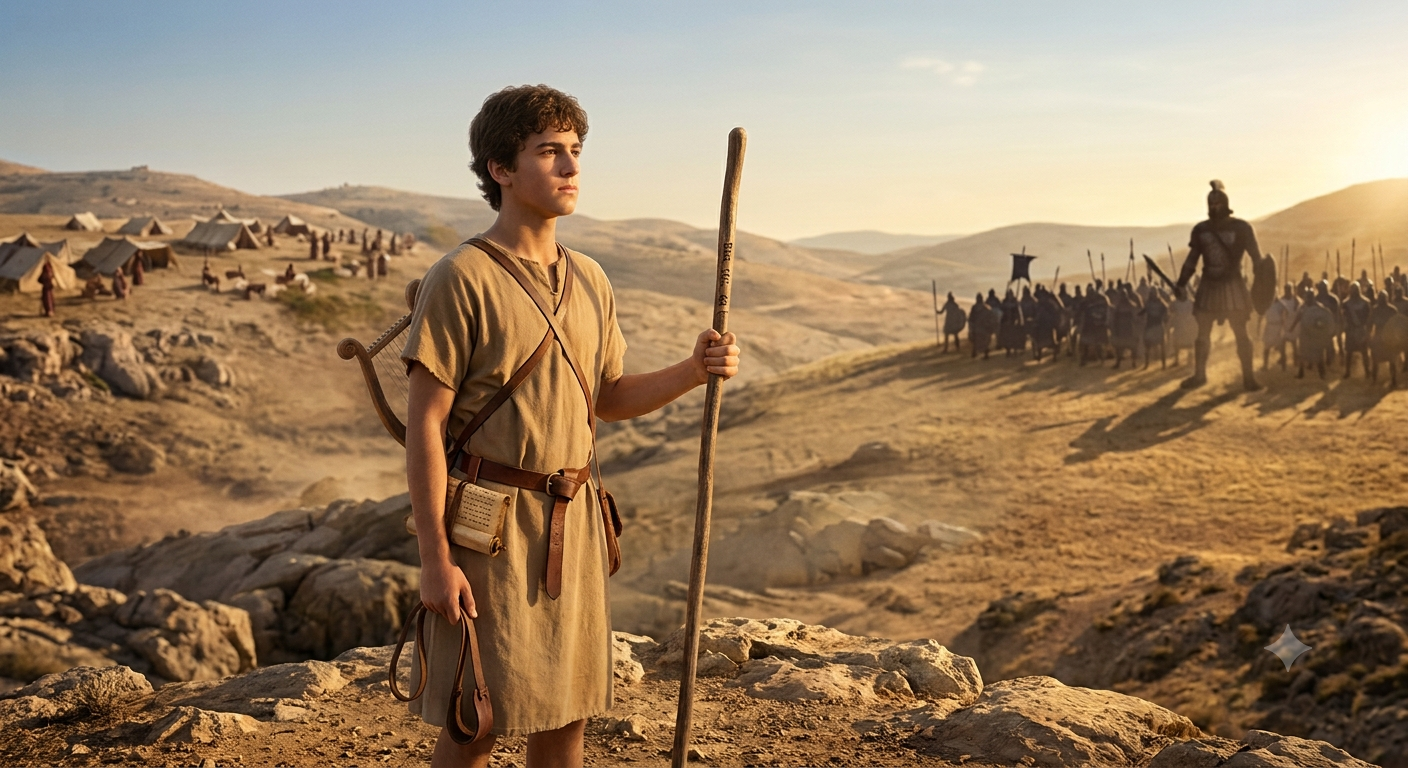
When we read scripture’s account of David and Goliath, it stands out that David is absolutely confident that God will cause David to defeat Goliath. David never shows anything but supreme confidence that God will use David to kill the giant and break the Philistine grip on Israel. Considering that no other soldier in King Saul’s army (nor the King himself) answered Goliath’s boastful challenge, David’s unwavering confidence is a striking exception. How could David be so confident of how God would work in a situation that seemed so hopeless?
David Had Received the Holy Spirit at his Anointing – 1 Samuel 16:13
When God sent the prophet Samuel to select a man to replace Saul as king, God led Samuel to the family of Jesse, and God eventually identified David as the one to be the next king (1 Samuel 16:1-12). To mark this occasion, Samuel anointed David with oil, and “the Spirit of the Lord came upon David from that day forward” (1 Samuel 16:13, NKJV). Therefore, even though the Holy Spirit did not inhabit believers generally until a thousand years later in Acts 2 at Pentecost, David had the presence of the Holy Spirit since the time that he was anointed as king (1 Samuel 16:13).
The Lord had Delivered David from a Lion and a Bear – 1 Samuel 17:34-37
It is understandable that King Saul questioned David’s ability to fight against a giant, proven warrior (1 Samuel 17:33). David replied that, as a shepherd, he had successfully killed both a lion and a bear because the Lord was his deliverer (1 Samuel 17:34-35). David sees the giant as a similar adversary (1 Samuel 17:36), and David very much believes that the Lord will deliver him again (1 Samuel 17:45-47).
Recognizing that the Enemy was Outside the Covenant People – 1 Samuel 17:26
When David became aware that Goliath was taunting the army of Israel, David asked, “for who is this uncircumcised Philistine, that he should defy the armies of the living God?” God’s covenant with Abraham specified that the ritual of circumcision was required for Jewish males to be identified as the covenant people (Genesis 17:10-14). Even Moses himself was threatened by God when Moses delayed circumcising his son (Exodus 4:24-26).
David’s observation drew attention to the fact that, no matter how threatening Goliath appeared, Goliath was a declared enemy of God and God’s people. While the Philistines were not listed specifically among the 7 nations of Canaan that Israel was commanded to remove (Deuteronomy 7:1-2), the territory that the Philistines inhabited was within the land that God had given to Israel (Deuteronomy 11:22-25). In addition, the Philistines did not observe circumcision, and they did worship idols (including the primary national god, Dagon – 1 Samuel 5:1-5 - usually depicted as a fish). So, a nation that was living on land that God allotted to Israel, who worshipped idols, rejected circumcision, and was also oppressing Israel around this time (1 Samuel 13:16-22) had to be fought and defeated.
David Appears to Have Meditated on Scripture
As we read through the Psalms that were written by David, it is clear that David had grasp of the Old Testament scriptures, both the law and the history of ancient Israel (the patriarchs, the Exodus, etc.). What may have happened is that David meditated on Old Testament scriptures, and then, because he could play a harp (probably a small harp), that David wrote Psalms about the truths that he was studying, and very possibly memorizing. If David was indeed meditating on God’s Word, then God’s Word promises success for those who practice meditation on His Word (Psalm 1:1-3, Joshua 1:8-9).