What Can We Learn From The Long Trial?

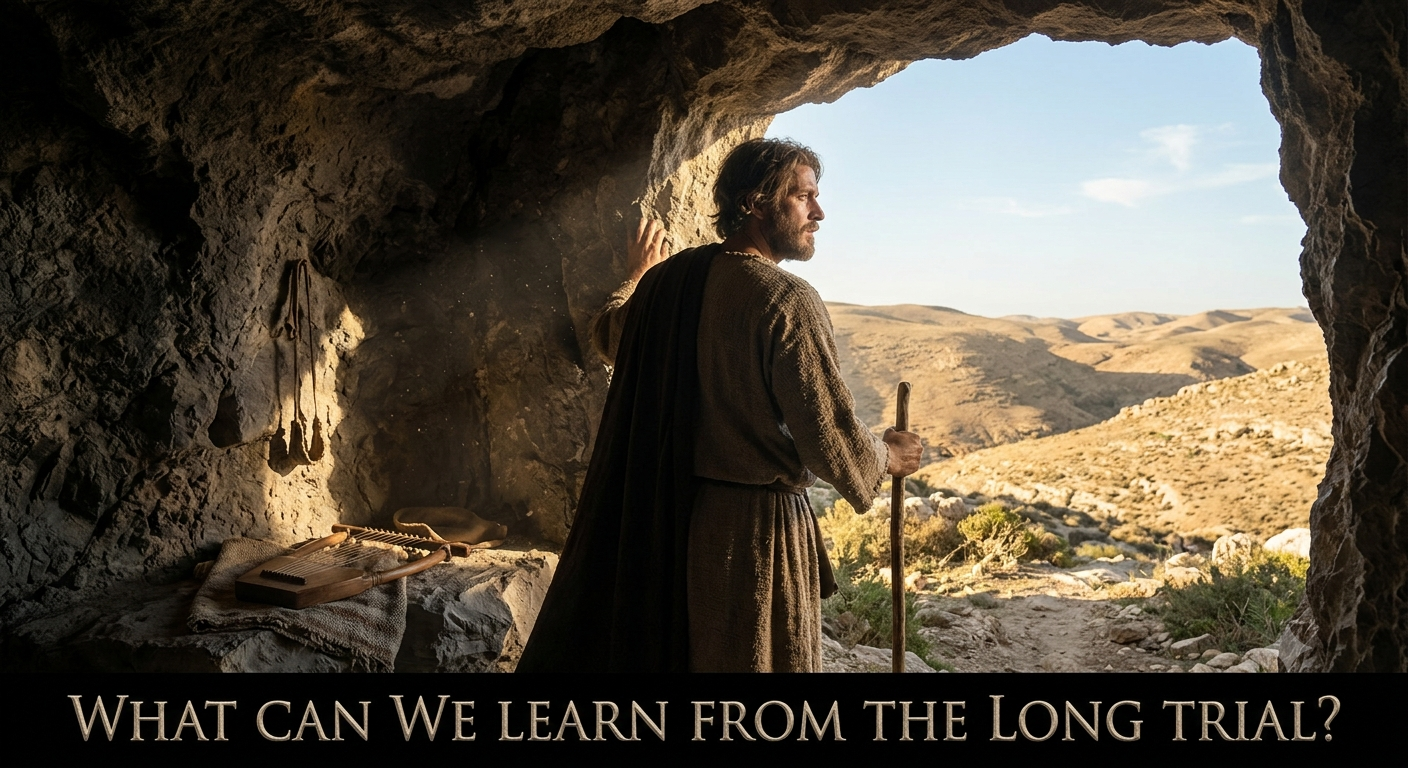
David on the Run from Saul … for Years
In a recent Bible study on the life of David, David’s running from King Saul made an impression on me. No matter what David did, whether it was right (showing mercy to Saul twice), or whether it was questionable (seeking refuge among the Philistines twice – 1 Samuel 21:10-15), David could not permanently shake Saul from seeking David’s life.
After a while, I began to wonder how long this situation lasted. God seemed to be in no hurry to resolve the situation. Saul’s attempts on David’s life began while David served in Saul’s court (1 Samuel 19:1-2, 10-11). Once David left Saul’s court, we read of David hiding in a cave (1 Samuel 22:1, 24:3), in a forest (1 Samuel 22:5), and at strongholds in the wilderness (1 Samuel 23:14). In fact, at one point David and his hundreds were on one side of a mountain while Saul and his army were on the other side of the same mountain (1 Samuel 23:26)!
Nowhere in Scripture is it specified exactly how long David was on the run from Saul. However, David was probably a teenager when he killed Goliath, and David became king of Judah when David was 30 years old (2 Samuel 5:4) soon after Saul’s death. Therefore, some scholars estimate that David was on the run from Saul somewhere from 7 to 13 years.
Situations That We Face Today
Hopefully none of us are in David’s exact situation. However, many of us today face some version of the long trial. Maybe we have the primary responsibility (or sole responsibility) to care for someone for several years, and the toll that the situation has taken on us is adding up. Maybe you are dealing with a financial situation where it is a struggle to make ends meet month after month, year after year. Maybe we have children, or grandchildren, that seem to get further and further from walking with Christ as the years go by no matter what we do to try to bring understanding.
We may be recovering from a long illness, working through the many twists and turns of a prolonged legal situation (a lawsuit, or a custody situation), or trying to recover from bankruptcy or an identity theft. Maybe we endure an ongoing conflict in the family (spouse, ex-spouse, relatives, etc.), at work, at church, or with neighbors.
The long trial can go on several weeks, months or years. We start out trying to be patient and kind, but eventually patience gives way to exasperation, or anger, and finally a discouragement that leaves us mostly numb and just trying to survive the situation. We may be the target of frequent criticism despite our best efforts. Mentally, physically, emotionally and spiritually we are heading toward exhaustion if we are not there already.
The stress of frequent trials clearly affected David. We read in the Psalms, “When my spirit was overwhelmed within me, then You knew my path … there is no one who acknowledges me; refuge has failed me; no one cares for my soul” (Psalm 142:3-4). In another Psalm, David writes, “I am weary with my crying; my throat is dry; my eyes fail while I wait for my God” (Psalm 69:3).
What is at Stake in Being Faithful in the Long Trial?
Certainly, it was stressful for David to live life on the run, constantly being mindful of where King Saul’s soldiers were, and often fearful for his life. But staying close to God over a prolonged period and confronting his fears resulted in insights about God’s power, and trustworthiness, as David saw time after time firsthand how God protected him (Psalm 34:4, 7). These situations resulted in David writing several Psalms of praise that still instruct us today.
David also learned to “inquire of the Lord” on a regular basis (1 Samuel 23:6-13). He developed the habit of seeking God’s direction with his questions and fears.
Another benefit from enduring the long trial is the development of the New Testament concept of long-suffering. Long-suffering is patiently enduring hardship, provocation or delay without giving in to anger or retaliation. The Greek indicates a quality of being “long tempered,” that is, having a long fuse before reacting.
Long-suffering is a fruit of the Spirit (Galatians 5:22), and long-suffering is also the first character quality in the definition of genuine love (1 Corinthians 13:4a). God the Father describes Himself as long-suffering (Exodus 34:6), and as New Testament believers we are instructed to be long-suffering (Ephesians 4:2, Colossians 3:12-13) as well.
Whatever difficult trial we may go through that develops long-suffering in us, if we are faithful, we can be sure of a reward. Whether that reward is on this earth (such as David becoming a leader) or in heaven, we can be sure that the trial is designed by God for our good, and to develop His character in us.